Nobody told you this when you started earning money.
A simple, honest guide to the financial gap that affects almost every Filipino breadwinner and what you can do about it.
Here is something most people never think about until it is already happening to them.
A critical illness. An accident. A permanent disability. Any one of these can stop your income overnight, whether you are 25 or 55, healthy your whole life or not.
When that happens, treatment can take months. Surgery, therapy, recovery. For most of that time, you cannot work. And in those months, families go through everything they have saved. The emergency fund runs out faster than expected. Assets get sold. Relatives get called for help.
Most people do not know what that feels like until it happens to them, or to someone they love.
Here is the thing nobody tells you when you start earning money.
When you become the breadwinner whether you planned it or it just happened you become something more than a person. You become a financial system.
Your income is not just income. It is your family's rent. Their food. Their tuition. Their medicine. Their future.
And that system has no backup.
When you are healthy and working, everything runs. But what happens when you are not? What happens when the system goes down even temporarily?
Most families have no answer to that question. Not because they do not care. Because nobody ever asked them to think about it.

So what exactly is the gap we are talking about?
Think of it this way. Every month you earn, you cover expenses. Maybe you save a little. Life continues.
But there are events that can stop your income completely and when that happens, your family's expenses do not stop with it.
You are diagnosed with a critical illness like cancer, stroke, or heart attack. Treatment is long and expensive. Income stops. Medical bills pile up. Savings disappear faster than you expect.
You suffer a permanent disability and can no longer work. Your family borrows money. Your kids miss school. Your spouse panics. And there is no clear timeline for when things go back to normal.
Something happens to you permanently. Your family has no income at all. They are left to figure it out alone.
None of these scenarios are rare. They happen to ordinary, hardworking people every single day.
The difference between the families that survive these moments and the ones that don't is not money. It is whether someone had a plan in place before it happened.
You might be thinking: "I already have savings."
That is a great start. Seriously. Most people do not even have that.
But here is a question worth sitting with: how many months of expenses do you have saved right now?
Three months? Six? If you are doing well, maybe a year.
Now consider: a serious hospitalization in the Philippines can cost anywhere from ₱200,000 to over ₱1,000,000. A critical illness like cancer or a stroke and the ongoing treatment that comes with it can last years.
Savings help. But they were not designed to absorb that kind of hit and still keep your family running at the same time.
The four types of people reading this right now.
All four of these people have the same gap. And all four of them can close it with the right plan, at the right cost, without being pressured into something they do not understand.
What most people think about insurance and what is actually true.
"Insurance is only for old people or rich people."
What is actually trueThe younger and healthier you are when you start, the lower your cost and the stronger your coverage. The best time to get protected is before you need it.
"I cannot afford it."
What is actually trueMost people are genuinely surprised by the cost. A solid plan that protects your income, covers critical illness, and secures your children's education can cost less per month than a streaming subscription.
"Agents are just going to pressure me into buying something."
What is actually trueThat experience is real and it is a problem in the industry. Which is why the right consultation is built around your needs, not around a sale. If it is not right for you, a good consultant will tell you that.
"I will get to it later."
What is actually truePeople say this every day. Later has a cost. Every month without protection is a month your family is exposed.
So what does a real plan actually do?
Think of it as a backup system for your income one that activates when you cannot work.
- Pays your family a benefit if something happens to you. They can cover expenses, debts, and daily life without scrambling.
- Covers hospitalization and critical illness costs. So a medical event does not erase everything you have built.
- Keeps your children's education on track. Their future does not depend on whether you are still standing.
- Replaces your income if you cannot work due to disability. An injury or illness does not have to mean financial collapse.
- Can grow into an investment your family inherits. Protection today that becomes generational wealth tomorrow.
This is not a product pitch. This is what a well-structured plan is designed to do. The specifics depend on your situation your income, your family size, your goals.
Which is exactly why it starts with a conversation, not a form.
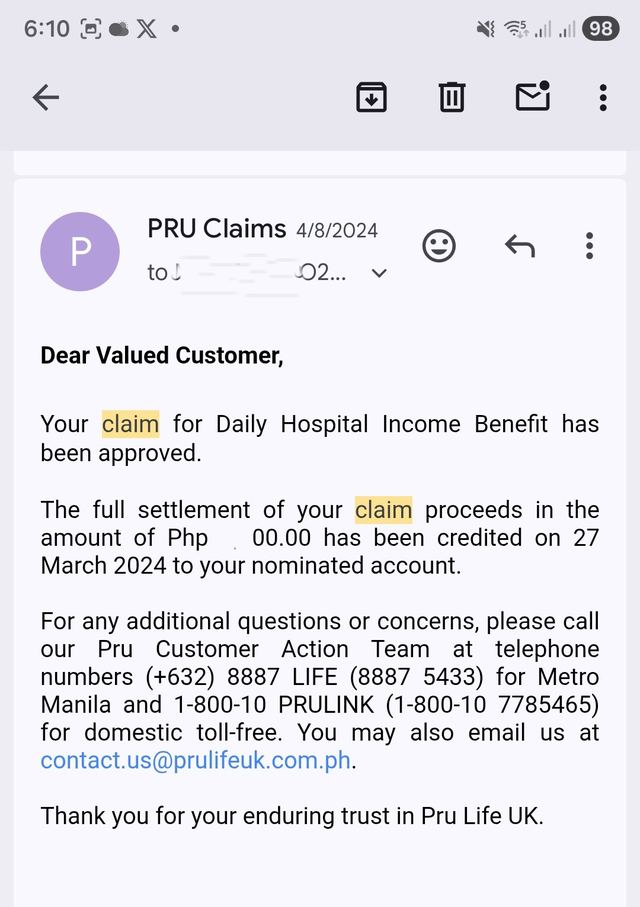
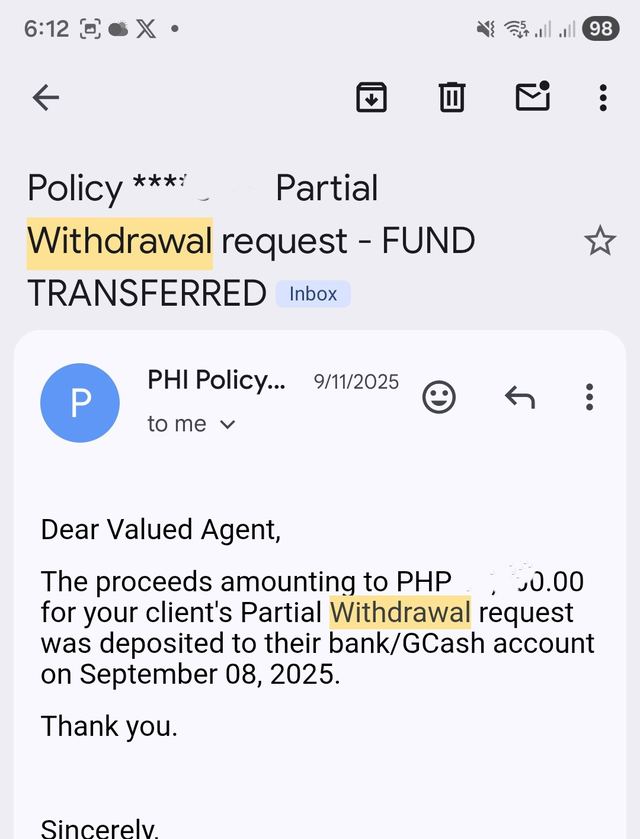
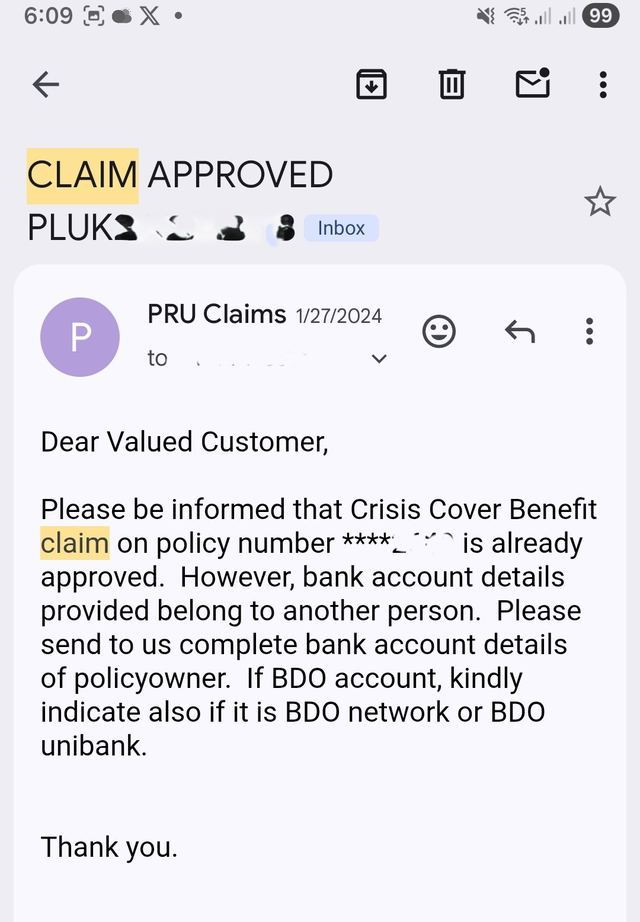
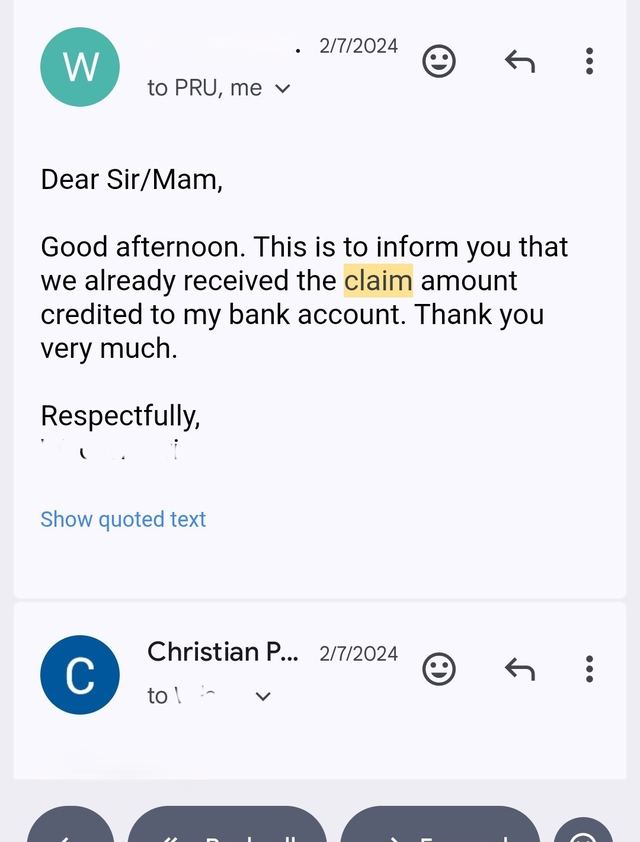
These are not hypothetical numbers.
Real claim approvals and a real client confirmation. This is what a plan is actually supposed to do when it is needed.
Curious what your plan would actually cost?
Answer a few quick questions and see a free estimate of your coverage and monthly cost. No pressure, no commitment, and no obligation to talk to anyone.
See My Free Estimate → Free · Takes 1 minute · No obligationBefore You Go
A few things worth knowing.
- ✓You do not need to be rich to get protected. Plans are designed to fit a range of budgets.
- ✓You do not need a medical exam in most cases. A simple health questionnaire is usually enough.
- ✓You might be approved in as fast as 24 hours. This is not a slow or complicated process.
- ✓The consultation is genuinely free. There is no catch and no pressure to decide on the spot.
- ✓If this is not right for you, you will be told so honestly. The goal is the right fit, not a quick sale.
Here is the part that stays with me most.
People who go through a health scare often try to get protected right after they recover. They want to make sure it never happens to their family again.
Many of them get declined.
Once a serious diagnosis is on record, most insurers will not cover it. The window that existed before the diagnosis, when they were healthy, the cost would have been low, and the approval would have been easy, that window is gone.
That is the part nobody tells you. It is not just about whether you can afford protection. It is about whether you are still eligible for it.
The best time to get protected is before you need it. Before the diagnosis. Before the accident. Before life makes the decision for you.
That is all this is, really. Not a product. Not a policy number.
It is a decision you can only make while you still can.
See what your plan would actually cost.
No forms to fill out in person, no salesy call. Just a free, honest estimate based on your income and your family's needs, in about 1 minute.
Get My Free Estimate → Free · No obligation · Takes 1 minute